The carbon cycle is the biogeochemical cycle by which carbon is exchanged among the biosphere, pedosphere, geosphere, hydrosphere, and atmosphere of Earth. Carbon is the main component of biological compounds as well as a major component of many minerals such as limestone. Along with the nitrogen cycle and the water cycle, the carbon cycle comprises a sequence of events that are key to make Earth capable of sustaining life. It describes the movement of carbon as it is recycled and reused throughout the biosphere, as well as long-term processes of carbon sequestration to and release from carbon sinks. Carbon sinks in the land and the ocean each currently take up about one-quarter of anthropogenic carbon emissions each year.
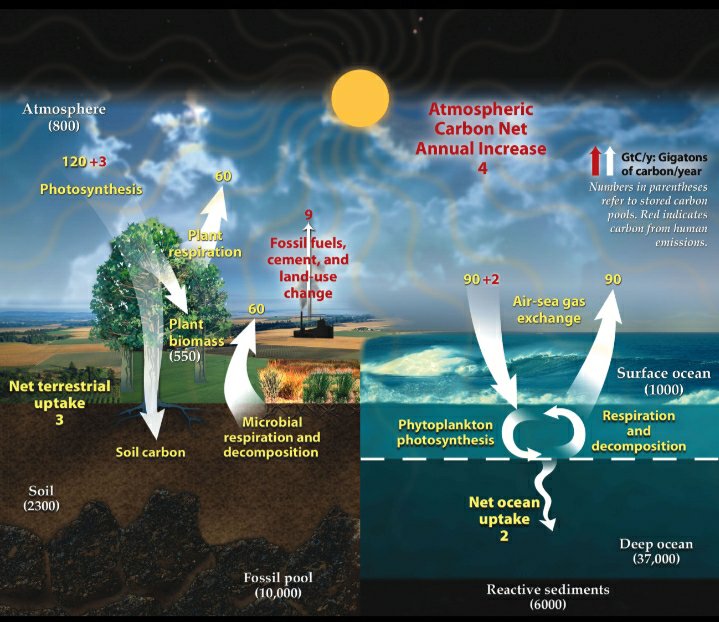
Fast carbon cycle showing the movement of carbon between land, atmosphere, and oceans in billions of tons (gigatons) per year. Yellow numbers are natural fluxes, red are human contributions, white are stored carbon. The effects of the slow carbon cycle, such as volcanic and tectonic activity are not included.
Humans have disturbed the biological carbon cycle for many centuries by modifying land use, and moreover with the recent industrial-scale mining of fossil carbon (coal, petroleum, and gas extraction, and cement ma

 Education with activity
Leave a comment